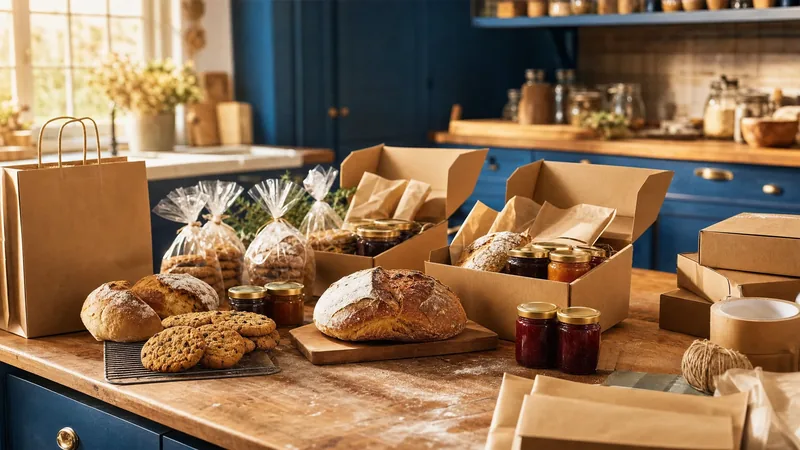
How to Start a Cottage Food Business in Montana
Last verified: November 24, 2026
Starting a cottage food business in Montana means making food in your home kitchen and selling it directly to customers. Montana law allows this for a defined group of foods, but the conditions are specific. You must register with your local health authority, label every product in a required format, and keep your sales in person.
This guide walks through how to start a cottage food business in Montana, step by step. It covers which products qualify, how registration works, what your labels must say, and where to confirm local business requirements. It also marks the points this guide does not cover, so you know who to ask.
What Counts as a Cottage Food Product in Montana
Montana defines cottage food products under MCA 50-50-102 as foods that are not potentially hazardous. The statute names jams, jellies, dried fruit, dry mixes, and baked goods as examples. If your product fits one of those groups, it is a strong candidate for this path. If you are unsure whether a recipe is potentially hazardous, ask your local health authority before you register.
Product type is only one filter. Your recipes, ingredients, and packaging all need to fit the same rules. Keep a written list of every recipe you plan to sell, because registration and later changes depend on that list.
Know the Sales Rules Before You Register
Montana's cottage food rules limit how you can sell. MCA 50-50-102 defines a direct sale as a face-to-face purchase that may not be by consignment and may not involve shipping or internet sales. Under MCA 50-50-116, a cottage food operation also may not provide its products through a wholesale establishment or on consignment.
In practice, your business has to be built around in-person sales to customers you deal with directly. A product sitting on a shop shelf on consignment, a wholesale order, or an online store with shipping falls outside the direct sale definition. Plan your sales channels before you print labels, because the channel shapes how you package and promote the product.
MCA 50-50-121 addresses people who sell only food that is not potentially hazardous at a farmer's market. Ask your local health authority how that section applies to your situation before you rely on it. This guide does not cover interstate sales, so confirm any out-of-state plans with the local health authority as well.
What You Need Before You Apply
Gather these items before you contact your local health authority. Having them ready makes the registration conversation faster and more accurate.
- A written list of every recipe you plan to sell, with complete ingredient lists
- Your home address, since registration is with the county where the home is located
- Draft labels for each product that include every required element
- A payment method for the nonrefundable registration fee, paid to the county
- A simple log for batch dates, ingredient sources, and sales records
Step-by-Step Process to Start Your Cottage Food Business
Step 1: Confirm Each Recipe Qualifies
Go through each recipe and check it against the cottage food definition in MCA 50-50-102. Write down the reason each product qualifies. This record helps you answer questions from your local health authority and gives you a reference when you consider adding new items later.
Do not assume a recipe qualifies because it looks similar to something that does. Foods with fillings, dairy, or other ingredients may raise questions under the definition. Get a clear answer from your local health authority before you commit to a product line.
Step 2: Choose Sales Channels That Fit the Law
Decide how customers will buy from you. Direct, face-to-face sales are the core of the cottage food path in Montana. Consignment, wholesale, shipping, and internet sales are not part of that definition under MCA 50-50-102 and MCA 50-50-116.
Write your sales plan down, including where you will sell, how you will take payment, and how customers will receive their purchases. If a channel you want is not clearly covered, ask your local health authority before you start.
Step 3: Register With Your Local Health Authority
MCA 50-50-117 requires a cottage food operation to register with the local health authority in the county where the home is located. Your local health authority may be a county health department or a city-county health department. Contact that office, ask for the cottage food registration materials, and submit your recipe and label information as requested.
The DPHHS cottage food frequently asked questions describe a one-time registration fee of $40.00. Under MCA 50-50-117, the registration fee is nonrefundable, paid to the county, and set by the Department of Public Health and Human Services by rule. The FAQ also says you must register again, and pay the fee again, if you move your operation or submit additional recipes and labels.
Confirm the current fee and payment method with your local health authority before you pay. The DPHHS FAQ is a guidance document, and the local office can tell you what applies to your county today.
Step 4: Design Compliant Labels
Every cottage food product must carry a label with specific information. MCA 50-50-116 lists these elements:
- The name and address of the operation
- The product name
- The ingredients
- The net quantity
- The allergens
- The required home kitchen statement
The home kitchen statement must appear in at least 11-point type and reads exactly as follows:
"Made in a home kitchen that is not subject to retail food establishment regulations or inspections."
Print a test label at actual size and check that every element is legible. Small containers are a common problem, so test the label on the smallest package you plan to sell. If your label design changes, confirm whether the change needs to be submitted to your local health authority.
Step 5: Check Local Business Licensing
The Montana Department of Commerce states that local city and county offices provide all business licensing in Montana, and the State of Montana provides professional licenses. See the business license guide. Contact the city or county office where you will operate to ask whether your home business needs any local business license or approval. Local planning boards and boards of adjustment may also be involved in land-use questions, so ask whether any local review applies to a home-based food business.
This guide does not cover the specific local business license fees, forms, or deadlines for every Montana city or county. Your city or county office will have those details.
Step 6: Check Meat Ingredients Carefully
MCA 50-49-203(7) says that meat processed at a state-licensed or federally approved establishment, whether by the producer or by a third party, may not be used in homemade food sold under the Montana Local Food Choice Act. The restriction does not apply to a producer who slaughters fewer than 1,000 poultry birds a year, but that producer remains subject to federal poultry rules that this guide does not cover.
If your recipes include meat, confirm the source and the rules that apply before you sell. Do not assume a meat ingredient is acceptable because it is commonly sold in stores.
Step 7: Set Up Taxes and Records
Ask the Montana Department of Revenue which taxes apply to your sales and what reporting you need to do. This guide does not cover tax rates or filing schedules. If you need a federal tax identification number, the Internal Revenue Service issues it. Keep detailed sales records from the start, including dates, products, quantities, and payment amounts.
A CPA can help you set up bookkeeping that matches your sales volume and business structure. Good records make tax season and any later review much easier.
How the Montana Local Food Choice Act Fits In
Montana also has a separate framework called the Montana Local Food Choice Act, found in MCA 50-49-201 to 50-49-203. Under MCA 50-49-203, transactions under the Act are limited to those directly between the producer and an informed end consumer, for home consumption or a traditional community social event. MCA 50-49-202 defines an informed end consumer as the last person to purchase a product who does not resell it and has been informed that the product is not licensed, permitted, certified, packaged, labeled, or inspected under any official regulations.
MCA 50-49-203(4) says homemade food may not be sold or used in a retail food establishment unless it has been licensed, permitted, certified, packaged, labeled, and inspected as required by law. The exception covers raw, unprocessed fruit, vegetables, and aquaculture products. Because the cottage food path and the Local Food Choice Act overlap in some areas and differ in others, do not assume one covers your business. Ask your local health authority which path applies to your products and sales.
Common Mistakes to Avoid
- Selling online or shipping orders: Internet sales and shipping fall outside the direct sale definition in MCA 50-50-102.
- Placing products on consignment: MCA 50-50-116 does not allow cottage food products to be provided by consignment or through a wholesale establishment.
- Skipping registration: Registration with the local health authority is required under MCA 50-50-117 before you sell.
- Using incomplete labels: Labels missing an allergen statement, an ingredient list, or the required home kitchen statement do not meet MCA 50-50-116.
- Printing the required statement too small: The home kitchen statement must be in at least 11-point type.
- Forgetting to re-register: Moving your operation or adding recipes and labels can require registration and the fee again.
- Relying on an outdated fee or form: Confirm the current fee and forms with your local health authority rather than relying on an old copy of a guidance document.
- Using meat from a licensed or federally approved plant: MCA 50-49-203(7) restricts this for homemade food sold under the Act.
What to Expect After You Register
This guide cannot predict your sales volume, income, or how quickly customers will find your products. Those results depend on your recipes, pricing, location, packaging, and how you market your business. Treat any income expectation as unknown until you have records from your own sales.
What the rules do give you is a clear lane: a registered home operation, compliant labels, and direct sales to customers you meet in person. Staying inside that lane protects your business and makes it easier to answer questions from customers, inspectors, and your local health authority.
Tips for Staying Compliant
- Keep a binder with your recipes, registration correspondence, label proofs, and sales logs.
- Ask your local health authority to confirm questions in writing when the answer matters to your business.
- Review your labels every time you change a recipe, ingredient, or package size.
- Set a calendar reminder to check the current registration fee and requirements each year.
- Talk with an attorney or CPA before you add a new sales channel or form a business entity.
Frequently Asked Questions
Do I need to register to sell cottage foods at a farmer's market in Montana?
MCA 50-50-121 addresses people who sell only food that is not potentially hazardous at a farmer's market. Confirm with your local health authority how that section applies to the products you plan to sell before you start.
How much does cottage food registration cost in Montana?
The DPHHS cottage food FAQ describes a one-time registration fee of $40.00. The FAQ also says the fee applies again if you move your operation or submit additional recipes and labels. Confirm the current amount with your county before you pay.
Can I ship cottage food products or sell them online?
MCA 50-50-102 defines a direct sale as a face-to-face purchase that may not involve shipping or internet sales. Build your business around in-person sales if you want to stay within the cottage food definition.
Who handles business licensing for a home food business in Montana?
The business license guide explains how Montana handles business licensing. Contact the city or county office where you operate for the local requirements that apply to you.
Disclaimer
This article is informational content only and is not legal or tax advice. Consult an attorney or CPA about your specific situation before you register, label products, or begin selling.
Sources
- DPHHS Cottage Food Frequently Asked Questions
- Montana Department of Commerce Business Licensing page
- MCA 50-50-102, definitions of cottage food products and direct sale
- MCA 50-50-116, cottage food operation requirements and labeling
- MCA 50-50-117, registration with the local health authority and registration fee
- MCA 50-50-121, farmer's market sellers of food that is not potentially hazardous
- MCA 50-49-201 to 50-49-203, Montana Local Food Choice Act
Keep exploring: related Montana guides
- How to Start a Coffee Shop Business in Montana
- How to Start a Craft Brewery in Montana
- How to Start a Catering Business in Montana
- How to Start a Distillery in Montana
- How to Start an LLC in Montana
- Montana Business License
- How Much Does It Cost to Start a Business in Montana
- All Montana business types
- Every Montana guide in one place