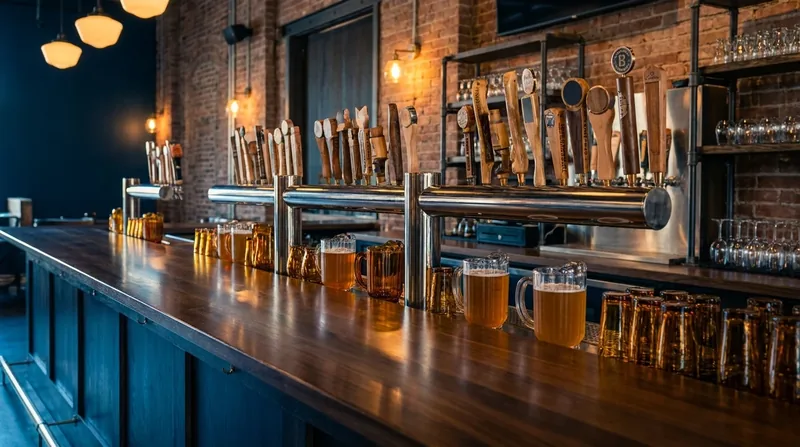
How to Start a Bar in Montana: License and Rules
Last verified: November 24, 2026
Opening a bar in Montana starts with the alcohol license, not the lease or the build-out. The license path you can use depends on where the building sits, whether it is inside an incorporated city or within five miles of one, and whether a license is available through the quota system or a competitive bid. This guide walks through the montana bar license process from the location check to renewal.
Montana law sets deadlines for bid awards, staff training, and renewals. A missed date can cost you a fee, the license itself, or your opening date. Read each section before you sign a lease or commit money, and put every date from this guide on a calendar.
What You Need Before You Start
Gather these items before you contact any agency. Having them ready keeps your applications moving and helps you spot problems while you can still change course.
- A street address for the premises and a map showing its distance from the nearest incorporated city or town. The five-mile boundary decides which quota rules apply.
- A business name and entity paperwork. Check the name with Business Name Search before you file through the Business Filing Portal.
- Funds for the state annual fee, the application processing fee for original applications, and any local license fee your city or county charges.
- A plan for the bid amount if you pursue a competitive bid license, along with the minimum bid the Department of Revenue sets for that license.
- A staff roster listing every employee who will sell, serve, or deliver alcohol, plus each immediate supervisor.
- A floor plan and proposed hours of operation for local zoning and health reviews.
Understanding Your Montana Bar License Options
The Quota County All-Beverages License is written for bars and taverns. Your options depend on whether your site is inside a city, whether it sits within five miles of one, and whether a license is offered through the county quota or through competitive bidding. The table below summarizes the two paths this guide covers.
| License path | Where it applies | How you get it |
|---|---|---|
| Quota County All-Beverages License | Bars and taverns anywhere in a county, but not inside an incorporated city or within five miles of one | Application to the Department of Revenue, subject to the county quota |
| Competitive bid all-beverages license | Licenses offered for bid by the Department of Revenue | Highest bid through the TransAction Portal (TAP), after the minimum bid is met |
The quota limit matters. For premises more than five miles outside any incorporated city or town, state law limits retail all-beverages licenses to one license for each 750 people in the county, not counting people who live in incorporated cities and towns. Ask the Department of Revenue whether a license is available in your county before you settle on a site.
State law also caps how many licenses one person can hold. No one may hold more than seven all-beverages licenses under MCA 16-4-205. The law allows exceptions for resort retail all-beverages licenses and for a secured party that receives an additional license after a default. If you plan to run more than one location, this cap shapes your growth plans.
Step-by-Step Guide to Your Montana Bar License
Work through these steps in order. Some tasks can overlap, but the location check comes first because it decides which license path you can use.
Step 1: Confirm the Location Rules
Start with the address. Find out whether the premises sits inside an incorporated city or town, and whether it sits within five miles of one, because the Quota County All-Beverages License is not available in either case. Then ask the local planning office, Planning Board, or Board of Adjustment whether a bar is allowed at the site. Get that answer in writing before you commit to a lease.
The Montana Department of Commerce states that local city and county offices provide all business licensing in Montana. See the business license guide. Begin your local questions with the city or county that serves the address.
Step 2: Choose Your License Path
If the site is outside incorporated cities and outside the five-mile ring, a Quota County All-Beverages License may be available in your county. The Department of Revenue's Cannabis and Alcohol Regulation Division (CARD) describes this license as one for bars and taverns that allows service of all alcoholic beverages from 8 a.m. to 2 a.m. If the site is inside a city or within the ring, the quota license does not fit, so you will need to look at licenses offered through the Department's other processes.
Check the current quota rules on the Department of Revenue's Quota County All-Beverages License page. The Available Licenses page lists licenses offered for sale, including listings in cities. Those listings are courtesy notices, so confirm each one with the Department before you rely on it.
Step 3: Apply Through the Quota or Competitive Bid Process
For a quota license, the application goes to the Department of Revenue. The Department lists a $400 new license fee, a $400 application processing fee that applies to original applications only, and a $400 renewal fee due every year by June 30. State law sets the annual state fee by town population: $400 outside incorporated cities and in towns under 2,000 people, $500 in cities over 2,000 and under 5,000, $650 in cities over 5,000 and under 10,000, and $800 in cities of 10,000 or more. The same fee applies within five miles of those cities. Confirm which figure applies to your address before you pay anything.
For a competitive bid, bids and opportunities are posted on the TransAction Portal (TAP). The Department of Revenue sets the minimum bid at 75% of the license's market value. If you are the highest bidder, you must submit the license application and fees within 60 days of the Department's notice, and you must pay the bid amount before approval. You must also start business within one year unless the Department grants an extension. The rules are in MCA 16-4-430 and on the Department of Revenue's competitive bid page.
Watch the forfeiture rules closely. A successful bidder forfeits the license, the license fees, and the bid amount if it applies to transfer the license within one year after receiving it, does not use it within one year, or stops using it within five years. A license issued through competitive bidding also cannot offer gambling, so build your business plan around that limit.
Step 4: Form Your Business Entity
Many owners form a limited liability company or corporation to hold the license and the lease. Check the name with Business Name Search, then file through the Business Filing Portal with the Montana Secretary of State's Business Services Division. This guide does not cover the filing fee, so confirm the amount with the Secretary of State before you file.
Step 5: Pay Fees and Calendar Renewals
Renewals are due every year by June 30. Under MCA 16-4-501, the Department of Revenue may add a late fee of 33 1/3% of the license fee if it is delinquent on July 1 of the renewal year. The late fee rises to 66 2/3% if the fee is delinquent on August 1, and to 100% if it is delinquent on September 1. Put June 30 on your calendar the day you receive the license.
Your local government may also license retail alcohol licensees. Under MCA 16-4-503, a city council or county commissioners may charge a local fee of up to five-eighths of the state all-beverages fee, or 100% of the state beer or beer and wine fee. Ask your city or county whether it charges a local fee and how much.
Step 6: Train Your Staff
Every employee who sells, serves, or delivers alcohol must complete approved responsible server and sales training within 60 days of hire. Their immediate supervisor must complete it too. Training must be repeated every 3 years after the initial course, so add those dates to your staff calendar. Under MCA 16-4-1005, the licensee must keep records of completion.
Under MCA 16-4-1006, the Department of Revenue certifies two classes of responsible server and sales training, one for on-premises licensees and one for off-premises licensees. A bar is an on-premises operation, so confirm that the course you choose is the on-premises class.
Step 7: Set Your Hours and Gambling Rules
Under MCA 16-3-304, licensed alcohol establishments must close between 2 a.m. and 8 a.m. each day. A city or town can restrict hours further by ordinance, so check local rules before you publish your hours or plan late-night staffing. The quota license's 8 a.m. to 2 a.m. service window follows the same overnight limit, but local ordinances may be stricter.
If you want gambling, read the rules before you buy. Under MCA 23-5-119, a license issued through competitive bidding cannot offer gambling. Under MCA 23-5-611(3), a licensee may not have on the premises or make available for play more than 20 video gambling machines of any combination.
Other Approvals You May Need
This guide covers the alcohol license and the rules tied to it. A bar also deals with food, fire, tax, and employment agencies, and this guide does not cover those requirements in full. Confirm each item below before you set a build-out or opening date.
- Food service and sanitation: confirm with your local health authority, which is your county or city-county health department.
- Fire safety and occupancy: confirm with the Department of Justice state fire prevention and investigation section.
- Federal alcohol rules: confirm with the Alcohol, Tobacco, Tax and Trade Bureau (TTB).
- Tax registrations: confirm with the Montana Department of Revenue.
- Employer obligations: confirm with the Montana Department of Labor and Industry and the Montana State Fund.
Common Mistakes to Avoid
- Signing a lease before you confirm the location rules and whether a license is available in that county.
- Assuming a quota license is available in every county, town, or address.
- Budgeting only for the bid amount and forgetting the state fees, the application processing fee, and any local fee.
- Missing the 60 day window to submit your application and fees after winning a bid.
- Letting staff training lapse or failing to keep completion records.
- Planning service past 2 a.m. or setting hours that conflict with a stricter local ordinance.
- Planning to offer gambling on a license issued through competitive bidding.
- Missing the June 30 renewal date, which exposes you to late fees that start at 33 1/3%.
Practical Tips for Your Application
- Call the Department of Revenue before you bid so you understand the current process and the forfeiture rules.
- Ask your local government for its written rules on alcohol hours, local fees, and zoning.
- Keep one master calendar for renewal dates, bid deadlines, and staff training dates.
- Store training certificates and license documents where a manager can produce them on request.
What to Expect After You Open
Operators who keep their deadlines, training records, and renewal payments in order may find the state side of the business easier to manage. Those tasks are within your control. Results such as sales, staffing costs, and profit depend on your location, menu, competition, and management, and this guide does not predict them.
Expect the license to shape your schedule. Renewal dates, the staff training cycle, and the closing window recur every year, so a yearly review of the dates in this guide may help you avoid missed deadlines.
Frequently Asked Questions
Can I open a quota bar inside a Montana city?
The Quota County All-Beverages License is not available inside an incorporated city or within five miles of one, according to the Department of Revenue. Inside a city, you will need to look at other licenses offered through the Department's processes, and you should confirm your options with the Department.
How many all-beverages licenses can one person hold?
No one may hold more than seven all-beverages licenses under MCA 16-4-205. Exceptions apply to resort retail all-beverages licenses and to a secured party that receives an additional license after a default.
What hours can a Montana bar stay open?
Licensed alcohol establishments must close between 2 a.m. and 8 a.m. each day under MCA 16-3-304. Your city or town may set stricter hours by ordinance, so check local rules before you finalize your schedule.
Does this guide cover the filing fee and all local fees?
No. This guide does not cover the filing fee for your business entity, so confirm it with the Montana Secretary of State. Confirm any local license fee with your city or county, because the amount is set locally.
Disclaimer
This article is information only, not legal or tax advice. Montana alcohol law, fees, and deadlines can change, so confirm current requirements with the Department of Revenue and consult an attorney or CPA before you sign a lease, submit a bid, or file paperwork.
Sources
- Department of Revenue, Quota County All-Beverages License
- Department of Revenue, Competitive Bid Licenses
- Department of Revenue, Available Licenses
- Montana Department of Commerce, Business Licensing
- Montana Code Annotated 16-4-201
- Montana Code Annotated 16-4-205
- Montana Code Annotated 16-4-430
- Montana Code Annotated 16-4-501
- Montana Code Annotated 16-4-503
- Montana Code Annotated 16-3-304
- Montana Code Annotated 16-4-1005 and 16-4-1006 (responsible server and sales training)
- Montana Code Annotated 23-5-119 and 23-5-611 (gambling and video gambling machines)
Keep exploring: related Montana guides
- How to Start a Bakery Business in Montana
- How to Start a Beer and Wine Restaurant in Montana
- How to Start a Restaurant in Montana
- How to Start a Catering Business in Montana
- How to Start an LLC in Montana
- Montana Business License
- How Much Does It Cost to Start a Business in Montana
- All Montana business types
- Every Montana guide in one place