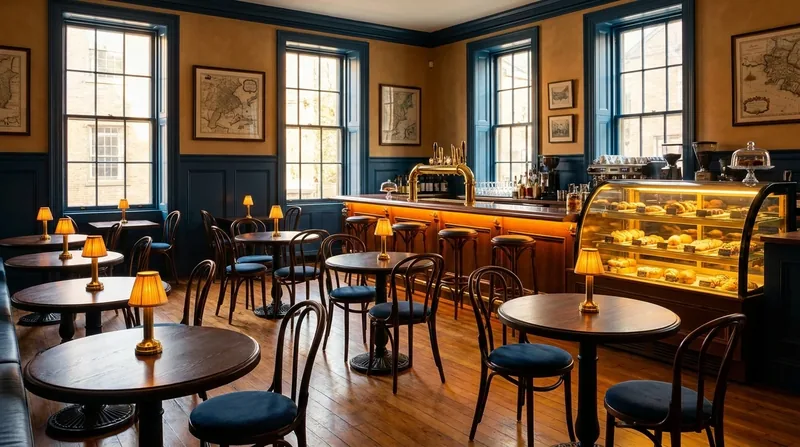
How to Start a Restaurant in Montana
Last verified: November 24, 2026
If you are learning how to start a restaurant business in Montana, expect to work with several offices rather than one. Local city and county offices handle general business licensing, the Department of Public Health and Human Services (DPHHS) licenses retail food establishments, and the Cannabis and Alcohol Regulation Division (CARD) at the Department of Revenue handles restaurant alcohol licenses. Each office has its own deadlines and fees.
The order you do things in matters. Your seat count affects your alcohol license fee, your hours affect what you can sell and when, and your lease determines where you can operate. Settle those decisions before you sign anything. This guide walks through the Montana restaurant license steps in a practical sequence and points you to the right office for anything it does not cover.
Materials and Documents to Gather First
Collect these items before you file anything. Several of them feed directly into the license applications.
- A written business plan with your concept, menu, planned operating hours, staffing plan and projected food and beverage sales
- A floor plan that shows the total seat count, the dining room, the kitchen and the cooking area
- A signed lease or purchase agreement for the premises, with the exact address you plan to license
- A business name you have checked in the Business Name Search tool
- Proof that your business entity has been formed with the Montana Secretary of State
- A kitchen equipment list and menu to share with your local health authority
- A training tracking sheet for responsible server and sales training, if you will sell alcohol
- A calendar of renewal dates, including the December 31 retail food license expiration and the June 30 alcohol license renewal
Step-by-Step Process to Open Your Restaurant
Work through these steps in order. Some can overlap, but the seating and hours decisions in Step 1 should come first because they affect several later steps.
Step 1: Define Your Concept, Seating and Hours
Decide what you are opening and how many seats it will hold before you talk to any office. Seating is not a detail to settle later. A restaurant beer and wine license sets its one-time initial fee by seat range, and adding seats after licensing means paying the difference. The state also expects a restaurant beer and wine licensee to have a dining room with at least half of the seats, a kitchen and cooking staff, and an evening dinner service at least 4 days a week for at least 2 hours between 5 p.m. and 11 p.m.
Set your hours now as well. Licensed alcohol establishments must close between 2 a.m. and 8 a.m. each day under MCA 16-3-304, and a city or town can restrict hours further by ordinance. Write your planned hours into your business plan so your lease, staffing and local rules line up.
Step 2: Check Your Name and Form Your Business Entity
Search the Business Name Search tool to confirm that your name is available. Then confirm with the Montana Secretary of State how to form your business entity through the Business Filing Portal. This guide does not cover entity fees, filing timelines or which entity type fits your situation. Confirm those with the Secretary of State's Business Services Division and with a CPA or attorney before you file. Keep your filed documents with your license records, since licensing offices may ask for proof of your business.
Step 3: Get Local Business Licensing
The Montana Department of Commerce states that local city and county offices provide all business licensing in Montana, and that the State of Montana provides professional licenses. See the business license guide. For a restaurant, your general business licensing stop is the city or county where the building is located. Ask that office which general business license applies, what it costs and whether the location is zoned for a restaurant.
This guide does not cover zoning, planning or building requirements. Confirm them with your local planning office, and with the Planning Board or Board of Adjustment where those apply.
Step 4: Apply for Your Annual Retail Food License
Operating a retail food establishment requires an annual license from DPHHS, and each establishment needs its own license. Under state law, size is set by employee count during peak hours. A small establishment has no more than two employees during peak hours, a medium establishment has three to nine, and a large establishment has 10 or more.
Licenses expire on December 31 each year. Pay before that date to avoid the $25 late fee that applies after it. The annual fee is $150 for a small establishment, $225 for a medium one and $275 for a large one. Mobile establishments are priced separately at $150 for a small mobile unit and $225 for a large mobile unit.
A retail food license is not valid until the local health officer signs or validates it. The officer must decide within 15 days after DPHHS notifies the officer, and failure to validate within 15 days counts as a refusal.
State law also limits local add-on charges. A county or other local government may not impose an inspection fee on top of the state license fee unless a violation persists and is not corrected after two inspections. Licenses are granted as a matter of right unless grounds for denial or cancellation exist. A temporary food establishment gets a permit from the local regulatory authority instead.
This guide does not cover the application forms or the inspection steps. Confirm those with DPHHS and your local health authority, which may be a county or city-county health department.
Step 5: Decide Whether to Add Beer and Wine
If you want to serve beer and wine, the restaurant beer and wine license under MCA 16-4-420 is built for full-service restaurants. The Department of Revenue says it is for restaurants in an incorporated city or within five miles of city limits. The core test is food. At least 65% of annual gross income must come from food prepared on the premises, and you must file an annual statement attesting to that percentage. Start tracking food sales from the beginning, because your annual statement depends on those records.
Plan for the fees listed in the table below. The one-time initial fee depends on the seat count you set in Step 1. The license also comes with operating conditions:
- Beer and wine service runs from 11 a.m. to 11 p.m.
- Curbside and other off-premises sales are allowed in the same window if food is ordered, the alcohol price does not exceed the food price, the alcohol appears on the food bill, and those sales count toward the 65% limit.
- The license does not qualify you for any gaming or gambling activity, and gambling may not occur on the premises.
- The license may not be concessioned.
- Licenses for restaurants with 101 or more seats may not exceed 25% of the licenses allowed in the quota area.
Existing licenses sometimes come up for sale. The Department of Revenue's Available Licenses page lists examples, including a Stevensville restaurant beer and wine license for 61 to 100 seats at $5,000, a Whitefish listing for 61 to 100 seats at $150,000, a Missoula listing for 101 or more seats at $75,000 and a Bozeman on-premises listing with catering endorsement for 101 or more seats at $275,000. Courtesy listings have a 6-month posting. These are examples only and do not show what a license will cost you.
An on-premises beer and wine licensee can add a catering endorsement for an annual fee of $200. It covers events within 100 miles of the licensed premises. A restaurant licensed under MCA 16-4-420 must provide food equal in cost to 65% of the total gross revenue from a catering contract.
Under MCA 16-4-503, a city council or county commissioners may license retail alcohol licensees and charge a local fee of up to five-eighths of the state all-beverages fee, or 100% of the state beer or beer and wine fee. Ask your local government what it charges.
This guide covers only the restaurant beer and wine license. It does not cover other alcohol license types. Confirm your options with CARD before you apply.
Step 6: Train Staff for Responsible Service
Each employee who sells, serves or delivers alcohol, and that employee's immediate supervisor, must complete approved responsible server training within 60 days of hire and again every 3 years after the initial training. Licensees must keep records of completion, so set up your tracking sheet before the first shift.
The Department of Revenue certifies two classes of training: one for on-premises licensees and one for off-premises licensees. The off-premises course must take at least half the time of the on-premises course. Choose the class that matches your license type.
Step 7: Confirm Taxes, Insurance and Employer Duties
This guide does not cover state tax registration, employer withholding, workers' compensation or unemployment insurance. Confirm what applies to your restaurant with the Montana Department of Revenue, the Montana Department of Labor and Industry, Montana State Fund and the Internal Revenue Service. Ask each office directly rather than assuming a requirement does or does not apply to your business.
Fees at a Glance
| Item | Amount |
|---|---|
| Small retail food establishment annual license | $150 |
| Medium retail food establishment annual license | $225 |
| Large retail food establishment annual license | $275 |
| Retail food late fee after December 31 | $25 |
| Restaurant beer and wine new license | $400 |
| Restaurant beer and wine application processing fee (original applications only) | $400 |
| Restaurant beer and wine one-time initial fee, by seat count | $5,000 to $20,000 |
| Restaurant beer and wine annual renewal, due by June 30 | $400 |
| Catering endorsement annual fee | $200 |
Common Mistakes to Avoid
- Choosing a space before confirming its seat count and zoning, which can change your alcohol license fee and what you are allowed to operate.
- Assuming a general business license is the only local requirement. Planning, building and zoning rules can apply as well.
- Letting an employee serve alcohol before completing approved training, or failing to keep completion records.
- Missing the 15-day validation window for the retail food license, or the December 31 renewal date.
- Counting curbside alcohol sales without food on the bill, which does not meet the off-premises conditions.
- Planning to add seats after licensing without budgeting for the difference payment.
Practical Tips
- Bring your floor plan to the local health authority early so the layout is settled before you build out the kitchen.
- Set calendar reminders for December 31 (retail food renewal), June 30 (alcohol renewal) and each employee's training deadline.
- Track food and beverage sales from day one, so your annual 65% food statement is backed by clean records.
- Keep your filings, license letters and renewal notices together in a shared folder that every manager can reach.
What to Expect After You Open
A well-planned application process can help you open on a timeline that fits your lease and staffing. The actual timing depends on the offices involved, how complete your paperwork is and your local requirements. Nothing in this guide promises a particular result for your restaurant.
A restaurant beer and wine license is designed around food-led service, so a concept with a strong menu and clear food sales records may be a better fit than one that depends mainly on beverage sales. Plan your menu, staffing and recordkeeping with that test in mind.
Once your licenses are validated and training records are on file, the work shifts to ongoing compliance. Annual renewals, food sales statements and training deadlines continue after you open. Missing them may lead to late fees or other consequences, so keep them on your calendar.
Frequently Asked Questions
How much does a restaurant beer and wine license cost in Montana?
The Department of Revenue lists a $400 new license fee and a $400 application processing fee for original applications. The one-time initial fee is $5,000 for 60 seats or fewer, $10,000 for 61 to 100 seats or $20,000 for 101 or more. The annual renewal is $400, due by June 30. Your city or county may also set a local fee under MCA 16-4-503.
Does a restaurant need a food license from DPHHS?
Operating a retail food establishment requires an annual license from DPHHS. Whether your restaurant falls under that classification depends on how it operates, so confirm the classification with DPHHS and your local health authority.
Can I sell beer and wine for takeout?
Under MCA 16-4-420, a restaurant beer and wine licensee may sell beer and wine for off-premises consumption, including curbside, from 11 a.m. to 11 p.m. Food must be ordered, the alcohol price cannot exceed the food price, the alcohol must appear on the food bill, and those sales count toward the 65% food requirement.
Who do I contact if my retail food license is not validated on time?
Start with the local health officer, who validates the retail food license, and with DPHHS, which issues it under MCA 50-50-201. This guide does not cover the next steps after a delayed validation, so confirm them with DPHHS directly.
Disclaimer
This content is for general information only and is not legal or tax advice. Licensing rules, fees and deadlines change, so confirm current requirements with the agencies named in this guide, and consult an attorney or CPA before making decisions about your business.
Sources
- Montana Department of Revenue, Restaurant Beer and Wine License
- Montana Department of Revenue, Available Licenses
- Montana Department of Public Health and Human Services, Retail Food License Renewal
- Montana Department of Commerce, Business Licensing
- Montana Code Annotated 16-3-304, Alcohol Establishment Closing Hours
- Montana Code Annotated 16-4-503, Local Alcohol License Fees
- Montana Code Annotated 16-4-420, 16-4-1005, 16-4-1006, 50-50-102, 50-50-201, 50-50-204, 50-50-205 and 50-50-214 (cited in text)
Keep exploring: related Montana guides
- How to Start a Food Truck in Montana
- How to Start a Bakery Business in Montana
- How to Start a Distillery in Montana
- How to Start a Bar in Montana
- How to Start an LLC in Montana
- Montana Business License
- How Much Does It Cost to Start a Business in Montana
- All Montana business types
- Every Montana guide in one place