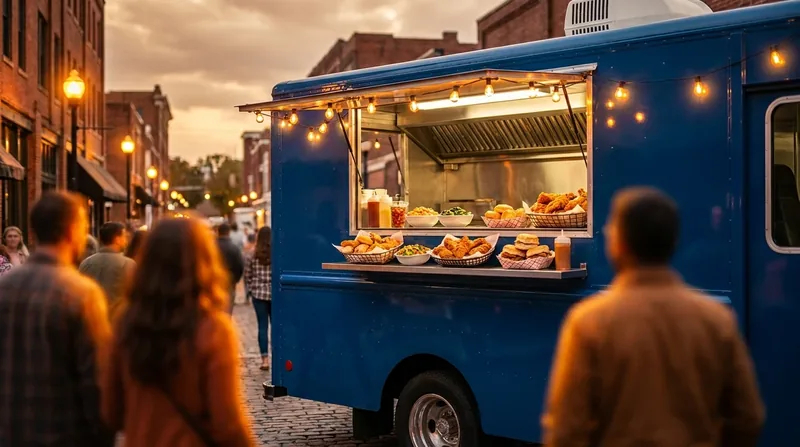
How to Start a Food Truck in Montana
Last verified: November 24, 2026
Starting a food truck in Montana comes down to a handful of state and local requirements that you need to clear before you sell a single meal. The core of it is the annual mobile food license from the Department of Public Health and Human Services (DPHHS), a plan review for your truck, and the right local permits for the places you plan to operate. This guide walks through those steps in order, with the fees that apply.
Montana splits business licensing between state and local offices. The Montana Department of Commerce states that local city and county offices provide all business licensing in Montana, and that the State of Montana provides professional licenses. See the business license guide. A food truck's operating license falls under the state food rules, so you will work with DPHHS and your local health authority, and with your city or county for zoning and parking.
What You Need Before You Start
Gather these items before you file anything. A missing item usually delays your plan review rather than stopping the whole project.
- A finished menu listing every food item, and where each one is prepared, stored and served.
- A truck or trailer with a servicing area for cleaning, inspection and maintenance. The state definition of a mobile food establishment includes this requirement.
- A realistic staffing plan showing how many employees you will have at peak hours, because that number sets your license category.
- A business name and a chosen business structure.
- A list of the events, parking spots or recurring locations where you plan to sell.
- Equipment details for sinks, refrigeration, water supply and waste holding, which your plan review will need to describe.
- A budget that covers license fees, plan review, insurance and any event permits.
How to Start a Food Truck Business in Montana
The steps below follow the order most food truck owners find easiest to manage. Some steps can run at the same time, but the license validation step depends on the plan review, so keep that sequence in mind.
Step 1: Define Your Menu and Operating Model
Decide what you will sell and how you will prepare it before you do anything else. A menu that requires cold holding or cooking on the truck changes what your plan review has to show. A menu built around items prepared off-site usually means fewer equipment questions. Write down your typical hours, your route and whether you will mostly operate at fixed events, because that affects which permit you need.
Step 2: Choose Your Business Structure and Check Your Name
Pick a business structure, such as a sole proprietorship, LLC or corporation, and check that the name you want is available. Check whether your structure requires a filing with the Montana Secretary of State, and use the Business Name Search on that office's site to test your name. Confirm the filing steps and any fees with the Secretary of State's Business Services Division. This guide does not cover those filing steps in detail.
Step 3: Confirm Zoning, Parking and Location Rules
Check the rules in each city or county where you plan to operate. Parking, vending and zoning rules are set locally, so a spot that works in one town may not work in the next. Ask the planning office whether your intended locations need approval from the Planning Board or the Board of Adjustment. This guide does not cover local zoning rules for any specific city or county, so confirm them with each local office before you commit to a route.
Step 4: Apply for the Mobile Food Establishment License
Montana requires a person operating a retail food establishment to get an annual license from DPHHS, and each establishment needs its own license. Under state law, a mobile food establishment is one that serves or sells food from a motor vehicle, nonmotorized cart, boat or other movable vehicle that changes location and needs a servicing area. Your license category depends on staffing at peak hours. A small mobile food establishment has two or fewer employees during peak hours. A large one has three or more.
The state fee is $150 for a small mobile unit and $225 for a large one. Licenses run January 1 to December 31. Under state law, retail food licenses are granted as a matter of right unless grounds for denial or cancellation exist, so a complete and accurate application is your main job.
Step 5: Submit Your Mobile Plan Review to DPHHS
DPHHS reviews each mobile food establishment plan, and it collects a plan review fee that is set by rule for each plan it reviews. This guide does not list that fee amount.Confirm the current amount with DPHHS before you submit.
Your plan should describe the truck layout, equipment, water and waste holding, handwashing, food storage and the servicing area you will use for cleaning, inspection and maintenance. Clear drawings and complete equipment lists tend to move a review along with fewer back-and-forth requests. If your menu or staffing changes during the review, tell DPHHS before you assume the original plan still applies.
Step 6: Have Your Local Health Officer Validate the License
A retail food establishment license is not valid until it is signed or validated by the local health officer. The local health officer must decide within 15 days after DPHHS notifies the officer. Under state law, failing to validate within 15 days counts as a refusal. Plan for this window, and ask your county or city-county health department how it receives notices so nothing sits in an inbox.
Local governments have limits on fees. Under state law, a county or other local government may not impose an inspection fee in addition to the state license fee, unless a violation persists and is not corrected after two inspections. If a local office asks for an extra inspection fee, ask which rule it is applying.
Step 7: Get Temporary Food Permits for Events
Event sales often fall under a different category than your regular route. A temporary food establishment operates at a fixed location for no more than 21 days in connection with a single event. It can also operate at a recurring event within a single county for no more than 45 days, if it uses a fixed menu. Temporary food establishments get a permit from the local health authority, whether for-profit or nonprofit.
The local health authority collects the temporary permit fee, and that fee may not exceed the retail food establishment license fee. A nonprofit temporary food establishment still needs a permit, but it is exempt from the permit fee. Ask the local health department which permit applies to each event on your calendar before you book it.
Step 8: Set Up Taxes, Insurance and Bookkeeping
Set up the tax accounts your business needs before your first sale. This guide does not list tax rates or filing schedules. Confirm which accounts apply to you with the Montana Department of Revenue and the Internal Revenue Service. If you plan to hire, check your employer obligations with the Montana Department of Labor and Industry.
Talk with an insurance agent about coverage for the truck, general liability and any equipment you own. Keep separate bank accounts for the business and track every event fee and permit cost in a single ledger. Clean records make license renewals and tax filings much easier.
Step 9: Renew Your License on Time
Retail food licenses expire on December 31 every year. Pay the renewal by that date to avoid a late fee. DPHHS states that a $25.00 late fee applies after December 31. Put the renewal date on your calendar well before it arrives, and check the DPHHS renewal page for the current notice and payment instructions.
Montana Food Truck License and Permit Fees
The table below lists the fees covered by the rules this guide uses. Figures can change, so confirm current amounts with the agency named in each row.
| License or Fee | Amount | Issued or Collected By |
|---|---|---|
| Small mobile food license (two or fewer employees at peak hours) | $150 | DPHHS |
| Large mobile food license (three or more employees at peak hours) | $225 | DPHHS |
| Mobile plan review fee | Set by rule; amount not listed in this guide | DPHHS |
| Late fee after December 31 | $25 | DPHHS |
| Temporary food establishment permit | May not exceed the retail food establishment license fee | Local health authority |
Common Mistakes to Avoid
- Assuming an event permit covers your regular route. Temporary permits cover the event rules you meet. Your mobile license is a separate requirement.
- Miscounting staff at peak hours. Your license category depends on peak-hour employees. If your staffing changes, confirm the impact with DPHHS.
- Waiting until the event to ask for a permit. Ask the local health authority early, so the permit is in hand before you set up.
- Missing the validation window. A license is not valid until the local health officer validates it, and failing to validate within 15 days counts as a refusal.
- Letting the renewal slip past December 31. The late fee applies after that date, and the calendar year cycle leaves little slack.
- Reading the nonprofit exemption too broadly. A nonprofit temporary food establishment is exempt from the permit fee, but it still needs a permit.
- Skipping local rules. State licensing does not replace city or county parking and zoning requirements.
Tips for a Smoother Launch
- Call your local health department before you finalize your truck build-out. A short conversation can prevent a costly redesign.
- Keep a binder, digital or paper, with your plan review, license, validation notice and every event permit.
- Build a route and event calendar early, so you know which permits to request and when.
- Write your menu to match your equipment. Fewer prep steps on the truck usually means a simpler plan review.
- Ask each agency which office handles which question. Montana splits licensing between state and local offices, so routing matters.
What to Expect After You Launch
Once your license is validated and your permits are in place, you may be able to operate on your planned route and at your approved events. Results depend on your menu, pricing, location, hours and how well you market the truck. This guide does not predict sales, profit or customer volume, and it does not promise any particular outcome.
Expect the paperwork to be the longest part of the process. The local validation window and the plan review both depend on agency timing, so build those waiting periods into your opening plan rather than assuming a fixed schedule.
Frequently Asked Questions
Do I need a separate license for each food truck?
Montana requires a separate license for each establishment. If you plan to run more than one truck, confirm with DPHHS how each one should be licensed before you submit your plan.
How much does a food truck license cost in Montana?
A small mobile food license is $150 and a large one is $225, based on the number of employees at peak hours. A $25 late fee applies if you pay after December 31. The mobile plan review fee is set by rule, and this guide does not list that amount.
Do I need a permit to sell at a festival?
Often, yes. A temporary food establishment permit comes from the local health authority when you operate at a fixed location for no more than 21 days in connection with a single event, or meet the recurring-event conditions. A nonprofit still needs a permit but is exempt from the permit fee.
Disclaimer
This guide is for information only. It is not legal or tax advice, and it does not replace guidance from a licensed professional. Consult an attorney or CPA before making decisions about your business structure, taxes, insurance or licensing, and confirm current requirements with the agencies named in this guide.
Sources
- Montana DPHHS retail food license renewal page
- Montana Department of Commerce Business Licensing page
- Montana Code Annotated sections 50-50-102, 50-50-120, 50-50-201, 50-50-204, 50-50-205 and 50-50-214
Keep exploring: related Montana guides
- How to Start a Distillery in Montana
- How to Start a Craft Brewery in Montana
- How to Start a Restaurant in Montana
- How to Start a Cottage Food Business in Montana
- How to Start an LLC in Montana
- Montana Business License
- How Much Does It Cost to Start a Business in Montana
- All Montana business types
- Every Montana guide in one place