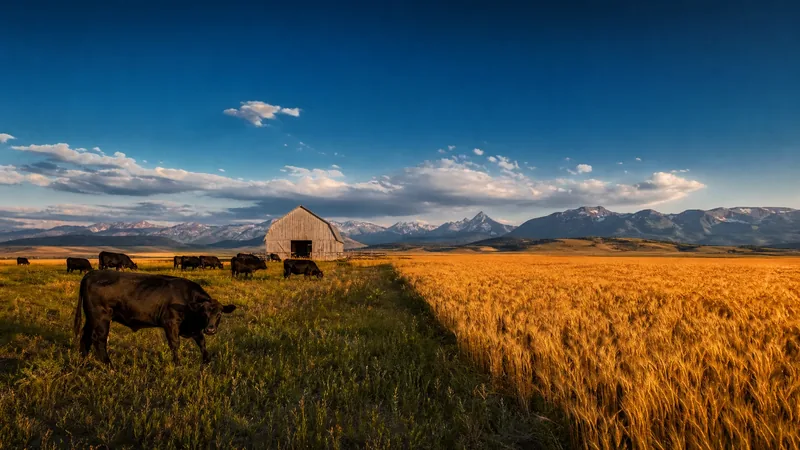
How to Start a Cattle Ranch in Montana
Last verified: November 24, 2026
Starting a cattle ranch in Montana takes more than land and livestock. Your brand, your inspection paperwork and your grazing arrangements all carry legal weight, and the rules come from state statute and from the Montana Department of Livestock. Sort those out early and the rest of your setup goes more smoothly.
This guide explains how to start a cattle ranch business in Montana in plain steps. It concentrates on the livestock rules this guide can source, including brands, inspections, grazing permits and fees. Where your setup depends on land, tax or entity questions outside that scope, it tells you which agency to ask.
What You Need Before You Start
Pull these items together before you contact any agency. You will refer to most of them again later, so keep them in one place.
- Your legal name exactly as it appears on your identification. Brands are recorded in the owner's name, and a legal name change has its own fee.
- A list of the livestock you plan to run, including cattle, horses, sheep and bison if you expect to raise them. Inspection and permit rules differ by animal.
- Payment for your brand application. Payment is required at the time you apply.
- A notary for any brand transfer, since every signature on a transfer must be notarized.
- Your land and grazing details, including any plan to move animals into an adjoining county.
- Contact details for your county or city office, which handles business licensing questions.
Step-by-Step Setup Process
Work through these steps in order. Some of them overlap, so a brand you record early will be ready when you start moving animals.
Step 1: Confirm Local Business Licensing
Start with local government. The Montana Department of Commerce states that local city and county offices provide all business licensing in Montana, and that the State of Montana provides professional licenses. See the business license guide. The Montana Department of Commerce business licensing guidance sets out that split.
Call your county office and ask what business licensing applies to a working ranch in your location. This guide does not cover zoning, land-use or building rules for ranch property. Confirm those with your county's Planning Board or Board of Adjustment, and with the County Commissioners where they apply.
Step 2: Plan Your Grazing Permits
If you plan to move livestock onto grazing land in an adjoining county, the Montana Department of Livestock lists adjoining county grazing permit fees. The fee is $30 for 1 to 100 animals, and it rises $10 for each additional 100 animals to $120 for 901 to 1000 animals. The permit is valid for 8 months within the 12 month period from issuance, so track those dates against your grazing calendar.
Fees are set by animal count, so confirm your herd size before you apply. Keep the permit paperwork with your livestock records so you can show it during a move.
Step 3: Record Your Brand
Recording a brand is the core of the livestock side of your business. Montana law makes it unlawful to artificially brand livestock running at large on the public domain or open range unless the brand was recorded or rerecorded in your name within the 10 years before the branding. MCA 81-3-102 sets that rule.
The Montana Department of Livestock, Brands Enforcement Division, handles applications, and Montana has more than 51,000 registered livestock brands. Under MCA 81-3-104, no person may record more than five brands. Check that limit before you settle on a design so you do not waste an application.
The standard brand recording fee is $200, and the fee with a cattle freeze brand is $210. If a brand is not registered or issued, $100 of the application fee is nonrefundable. Each application includes a maximum of one cattle, one horse, one sheep and one bison brand. Payment is required when you apply, and you should allow 4 to 6 weeks for processing. You can reach the division at (406) 444-2045 or [email protected].
Rerecording: Montana law sets the rerecording year for each 10th year after 1921. A brand recorded earlier may need to be rerecorded on that schedule. Confirm your exact timing with the Brands Enforcement Division before you rely on an older brand.
Step 4: Learn the Inspection Rules Before You Move Livestock
Brand inspection is required for cattle and horses in several situations. You need it before crossing a county line or leaving the state, on a change of ownership, before sale at a livestock auction, and before slaughter at a licensed establishment. The Department of Livestock says all inspections must be made in daylight, so plan loading and sorting for daytime hours.
On a change of ownership, the seller carries the inspection duty. If you are buying cattle, ask the seller for proof that the inspection was completed, and do not assume it was. If you are selling, build the inspection into your sale schedule before the animals leave your place.
Inspection fees are $1 per head for cattle, $10 per head for an annual horse inspection and $30 per head for a lifetime horse inspection. Market, shipping, sheep and bison permits cost $1 per permit from a local inspector or permit writer, or $0 through the online permit system.
The exceptions in MCA 81-3-212 cover livestock driven on the hoof by the owner from one county to an adjoining county, onto land the owner owns or controls for pasturing, feeding or changing the range. They also cover livestock transported to a veterinarian for health treatment and returned to the original premises with a veterinarian's certification of treatment. Read the section before you rely on an exception, because the conditions matter.
Step 5: Plan for Transfers and Ownership Changes
A brand changes hands through a transfer, and the Brands Enforcement Division lists the transfer fee at $200. Every signature on a transfer must be notarized, so schedule a notary before you file. If your legal name changes, the division lists a $10 legal name change fee.
Keep the owner's name on your brand record consistent with the name on your livestock paperwork. The recording rule ties the brand to the owner's name, so a mismatch can create problems when you move or sell animals.
Step 6: Set Up Your Business Entity and Tax Registrations
This guide does not cover how to form an LLC, corporation or other business entity, or how to register for state and federal taxes. Confirm those steps with the Montana Secretary of State, Business Services Division, which runs the Business Filing Portal and Business Name Search. Ask the Montana Department of Revenue about state tax registration, and ask the Internal Revenue Service about federal tax identification.
Use the same legal entity name across your brand record, permits and bank accounts. Consistent names reduce paperwork friction when you transfer a brand or renew a permit.
Step 7: Build Your Records and Get Help
Keep a single business file with your brand record, inspection records, grazing permits, transfer documents and notary receipts. Good records make later inspections and sales easier to document. If you want planning help, consider contacting the Montana Small Business Development Center, which can point you to the right resources for your stage of setup.
Fees at a Glance
The table below lists the fees stated in Department of Livestock materials. Confirm current amounts before you pay, because fee schedules can change.
| Item | Fee | Notes |
|---|---|---|
| Standard brand recording | $200 | Payment due at application |
| Brand recording with cattle freeze brand | $210 | $100 of the application fee is nonrefundable if the brand is not registered or issued |
| Brand transfer | $200 | All transfer signatures must be notarized |
| Legal name change | $10 | Listed with brand fees |
| Cattle brand inspection | $1 per head | Required before certain moves and sales |
| Horse inspection | $10 per head annual, $30 per head lifetime | Per horse |
| Market, shipping, sheep and bison permit | $1 from a local inspector, $0 online | Online permit system |
| Adjoining county grazing permit | $30 for 1 to 100 animals, $120 for 901 to 1000 animals | Valid 8 months within the 12 month period from issuance |
Expected Results
With your brand recorded, your inspection routine in place and your grazing permits matched to your herd, you should be able to move and sell livestock within Montana's livestock rules. These steps are designed to reduce delays and paperwork problems. They do not guarantee profit, herd growth or any particular timeline beyond the processing time the Department of Livestock states.
Expect the brand process to take 4 to 6 weeks from application. Plan herd purchases and sales around that window rather than counting on a faster turnaround.
Common Mistakes to Avoid
- Branding before recording: Under MCA 81-3-102, branding open range livestock without a recorded or rerecorded brand in your name within the required period is unlawful.
- Skipping the notary: A transfer needs notarized signatures on every line, so an unnotarized signature can hold up the whole transfer.
- Assuming the seller handled the inspection: The seller carries the duty on a change of ownership, but confirm the inspection was done before you take delivery.
- Scheduling inspections after dark: All inspections must be made in daylight.
- Letting a grazing permit lapse: The permit is valid for 8 months within the 12 month period from issuance, so note the end date when you receive it.
- Ignoring the brand limit: No person may record more than five brands.
- Overlooking the nonrefundable portion: $100 of the application fee is nonrefundable if the brand is not registered or issued.
- Treating licensing as a state matter: Start with your county or city office for business licensing.
Tips for a Smoother Start
- Record your brand early, then build your inspection and permit calendar around it.
- Choose a brand design you expect to use for years, and check the five-brand limit before you commit to it.
- Keep a copy of every signed record and receipt in your business file.
- Call the Brands Enforcement Division at (406) 444-2045 or write to [email protected] before you move animals if you are unsure whether an inspection applies.
- Make a list of which agency answers which question so you do not spend time at the wrong desk.
Frequently Asked Questions
Do I need to record a brand before I run cattle on open range?
Under MCA 81-3-102, branding livestock running at large on the public domain or open range is unlawful unless the brand was recorded or rerecorded in your name within the 10 years before the branding. Confirm your situation with the Brands Enforcement Division before you brand.
How long does brand processing take?
The Brands Enforcement Division says to allow 4 to 6 weeks for a Montana Livestock Brand Application to be processed.
Who handles business licensing for a Montana ranch?
The business license guide explains how Montana handles business licensing. Start with your county or city office.
Disclaimer
This guide is informational only and is not legal or tax advice. Consult an attorney or CPA before you form an entity, sign a lease or grazing agreement, or make tax decisions for your ranch.
Sources
Keep exploring: related Montana guides
- How to Start a Campground or RV Park in Montana
- How to Start a Farm or Ranch Business in Montana
- How to Start a Meat Processing Business in Montana
- How to Start a Hunting Outfitter Business in Montana
- How to Start an LLC in Montana
- Montana Business License
- How Much Does It Cost to Start a Business in Montana
- All Montana business types
- Every Montana guide in one place